Friday, October 26, 2012

The Tree That Let Go

If you're a kid, one of the best things about living on a farm, even one as modest as our own, is having a pasture to frolic in, barn stalls to hide in, animals to play with, a garden to taste, a creek to splash in, woods to explore, and plenty of trees to climb. It seems a rare thing these days for kids to have so many outdoor spaces to enjoy, so we do our best to make sure that our girls have opportunities every day to spend a generous amount of time outside the house. Of course, their adventures often bring with them a certain amount of risk, and they have had more than a few scrapes and bumps since we moved here. But they seem to consider these minor injuries a small price to pay for the joys of their outdoor escapades.

In the past few years of homeschooling the girls, I have discovered that outdoor time not only provides endless opportunities for exercise and adventure; it can also do wonders to facilitate indoor learning. (Of course, many other parents, teachers, and scholars have discovered this as well. You can read much more about this issue in the well-cited article "Children's Contact with the Outdoors and Nature: A Focus on Educators and Educational Settings," published by the Children and Nature Network.) Because of that, I often break up our "school hours" with several mini-recesses in which the girls can traipse through the woods, play in the Enchanted Garden, visit with the animals in the barnyard, or simply jump rope in the driveway. It truly is amazing what 10 minutes of fresh air can do for student morale! But again, this carries with it some risk. They occasionally get involved in something that seems much more pressing than the awaiting math problems, making coming back indoors wrenchingly difficult. Or a chicken poops on one of them and we have to interrupt everything for a sponge bath and a change of clothes. Or something more serious. Like last Thursday when one of the trees in the barnyard let go of Segi.

The girls and I had been studying pumpkins that morning. We had read a couple of books about the life cycle of pumpkins and then had planted a few pumpkin seeds to grow in the Discovery Room along with the hodgepodge of other "teaching plants" we have there. Our next activity was to be a visit the local Pumpkin Patch to pick up a few pumpkins for carving and baking, but I needed a few minutes to record some of our work, so I told the girls, "Just run out to the barnyard for a quick recess. I'll call you to come to the car in a few minutes." Before those few minutes were up, Simi (the younger of my two daughters) burst through the door, crying that Segi had fallen out of Grandma Tree and that she was "really hurt!" I grabbed my boots and dashed out the door and straight to the barnyard. By the time I got to the gate, Segi had gotten herself up and was walking toward me. At first, I thought, "Oh, thank goodness. It's nothing serious." Then I saw her lower left arm. It looked like one of those sidewalks they're laying in Davidson now that go along straight for a bit and then abruptly jut out to avoid the tree standing in the path. The gnarled bend was right at her wrist. I knew right then we were on our way to the hospital.
First, though, our pediatrician's office sent us to an Emergency Center, where Segi got a few X-rays and a swallow of pain medicine, and I got several hints that this might be more serious than a simple broken bone. We were next sent (after a few hours of waiting, of course) to an orthopedic surgeon's office, who informed us that in addition to the other breaks, the growth plate in her wrist was badly displaced and, indeed, would nee to be surgically corrected--immediately. So off we trudged to the hospital, Segi now beside herself with pain and getting delirious from hunger. Simi and I spent the next few hours trying to comfort her and make her as comfortable as possible.  Finally, around 5:30 that evening, they wheeled Segi into the operating room. Everything went fine, and though we had a few rough days, she seems to have adapted quickly to her cast and the lifestyle changes it has necessitated.

The whole time we were sitting in the hospital fretting and waiting . . . and fretting and waiting some more, I kept thinking of how, just the night before, my husband had come inside and told me, "Those girls shouldn't be climbing so much in that tree. One of them is going to fall and break an arm." Seriously, just the night before. "Oh, honey," I'd responded nonchalantly, "What's the point of being a kid if you can't climb a tree?" My siblings and I had been raised in a rural town in Tennessee and had spent a good deal of our childhood out in the woods swinging on vines, traversing creeks, wading on half-frozen ponds, and of course, climbing lots and lots of trees. We loved it, and so do my girls. And though I sometimes do worry a bit, I generally agree with E.B. White when, in his passage on the Zuckermans' barn swing, he says that "Children almost always hang onto thing tighter than their parents think they will." So my own kids don't often get much discouragement from climbing high and swinging wide. In fact, the girls had recently taken to climbing Grandma tree with books in hand and perching aloft to read. Okay, maybe that's not such a great idea when you're 15 feet in the air. Maybe mamas don't always know best.

For my older daughter, Segi, always wants to climb just a little higher than reasonable. She's the kid at the park who ignores the civilized little steps leading up to the tunnel she's meant to crawl through and instead climbs up the wall and onto the top of the tunnel. She was the four-year-old that terrified all the other guests at the gymnastics birthday party by zipping up to the top of the climbing ropes and hanging over to wave at everyone. I should have remembered this about her. I should have given her and her sister some thoughtful guidance and some serious warnings. But I hadn't, and this time, she'd not only gone very high but had selected a branch that was too small--and probably too rotted--to hold her. And much to her surprise, it couldn't. With a loud cracked, it led her right to the leafy ground beneath--luckily on her wrist and not her head.

A kid sharing one of the several waiting areas we sat in on the day of her accident asked us upon hearing Segi's story, "Are you going to cut the tree down?" "Of course not!" all three of us said together. It would never have occurred to Segi to be angry at the tree that she and her sister had recently dubbed "Grandma Tree." One of the older Sweetgums in the barnyard, it is probably the best climbing tree on our property. But it is also a great tree to read under, and to hug, and to chat with during a rough day. As much as Segi regrets no longer being able to climb Grandma Tree, she still loves her just as much, and now has the opportunity to know and enjoy her in a myriad of new ways.


Harry Behn writes that "Trees are the kindest things I know, they do no harm, they simply grow." It is hard to disagree with that. And yet even the kindest trees--like even the kindest people--also have their weak spots, and if we assume they are stronger than they are, then they can indeed leave us hurting. The tree let go of Segi because it was not as strong at that particular place as Segi assumed it would be. There is a lesson we can all take away from this. It's not, I believe, that we should stop climbing high or running fast or jumping long. It is, rather, that we should acknowledge that even the strongest amongst us are somehow, somewhere weak, and that if we can accept and respect those weaknesses, we will all be much better off. 

Trees
--Harry Behn

Trees are the kindest things I know,
They do no harm, they simply grow

And spread a shade for sleepy cows,
And gather birds among their boughs.

They give us fruit in leaves above,
And wood to make our houses of,

And leaves to burn on Halloween
And in the Spring new buds of green.

They are first when day's begun
To touch the beams of morning sun,

They are the last to hold the light
When evening changes into night.

And when a moon floats on the sky
They hum a drowsy lullaby

Of sleepy children long ago...
Trees are the kindest things I know.


Thursday, October 11, 2012

The Fleeting Joys of Apple Season


That sweet, aromatic, not-too-hot-and-not-too-cool time that is Apple Season has come and gone here in the Carolina Piedmont, and I miss it already. The days of picking, crunching and baking our hearts out always seem to go by much too quickly. But perhaps that makes them all the sweeter while they last. Often just as sweet as the apples themselves is the experience of trekking through a local orchard with my husband and daughters to find the crispiest, juiciest ones.

Papa adorns his apple sprites
with Morning Glory blossoms.
This year we visited Carrigan Farms in Mooresville, NC to do our picking. It was a perfect day for it--bright, crisp and dry. We picked so many we had a hard time carrying them back to the car! There are many other great places to pick apples in North Carolina, especially in the western mountains. In fact, apples are grown in all 50 U.S. states, and grown commercially in 36 states. If you'd like to learn where you can find locally grown apples in or near your own community, visit www.pickyourown.org. (This website lists pick-your-own farms for apples and many other kinds of produce throughout U.S. and in a number of other countries as well.)

Not only are apples a delicious, inexpensive, and convenient food, they are also packed with healthy nutrients. While many of us grew up hearing that "an apple a day keeps the doctor away," Kerri-Ann Jennings points out in this Huffington Post article that these days,
apples are so commonplace that they're almost overlooked and pushed aside by flashier superfruits, such as pomegranates and goji berries.
But apples truly are a superfood themselves. Among the many benefits they offer are:
  • Bone protection
  • Asthma relief
  • Weight control
  • Immunity enhancement
  • Cholesterol control
  • Alzheimer's protection
  • Parkinson's protection
  • Cancer protection (lung, breast, colon and liver)
  • Diabetes management
  • Dental health
  • Gallstone prevention
  • Digestive health
  • Hemorrhoid prevention
  • Liver detoxification
It makes sense, then, that humans have enjoyed and celebrated apples for many generations. Cultivated for over 4,000 years, apples have often played a prominent role in festive occasions as well as in everyday life. The ancient Greeks used apples both ceremoniously (e.g., in weddings) and medicinally. Hippocrates, known as "the father of medicine," reportedly said, “Let your food be your medicine and let your medicine be your food.” As Anna Lovett-Brown points out in her essay on the history of apples, "his most favored prescriptions for his patients included apples, dates and barley mush." The Romans also celebrated this nutritious and tasty fruit. Through cross-breeding and grafting, they developed its sweetness and increased its size, and spread it throughout Europe. They considered the apple a symbol of love and fertility, and fĂȘted Pomona, the goddess of the orchards, during this season of the year (on November 1). Apples also featured prominently in Samhain, the Celt's autumnal harvest celebration.

Apples are not native to North America (with the exception of the sour crabapple), but were brought here by the earliest European settlers and soon embraced by Native Americans, who cultivated many new varieties. By the mid-seventeenth century, apple orchards were spreading rapidly. Today, the U.S. is the second leading producer of apples in the world.


In continuing our own family's tradition of picking apples together each fall, then, we are following a long, culturally diverse line of predecessors. So what have we done with all those apples we picked? After my comedy-of-errors attempt to make a year's supply of applesauce a couple of apple-picking seasons ago, I foreswore ever trying that again. Instead, we've made sauteed apples with biscuits, apple turnovers, apple pancakes, and an "Apple Crisp Pie" I'd never tried before (pictured below). If you'd like to try it, you can find the recipe here. We also hope to make apple muffins and, of course, Aunt Tootie's Apple Cake (see my post from Friday, November 18, 2011). Mmmm mmmm.

I hope you get to enjoy some local apples and other autumn harvests this fall. There really is so very much to savor and be thankful for this time of year. All hail Pomona! 


After Apple-Picking

by Robert Frost
My long two-pointed ladder's sticking through a tree
Toward heaven still,
And there's a barrel that I didn't fill
Beside it, and there may be two or three
Apples I didn't pick upon some bough.
But I am done with apple-picking now.
Essence of winter sleep is on the night,
The scent of apples: I am drowsing off.
I cannot rub the strangeness from my sight
I got from looking through a pane of glass
I skimmed this morning from the drinking trough
And held against the world of hoary grass.
It melted, and I let it fall and break.
But I was well
Upon my way to sleep before it fell,
And I could tell
What form my dreaming was about to take.
Magnified apples appear and disappear,
Stem end and blossom end,
And every fleck of russet showing clear.
My instep arch not only keeps the ache,
It keeps the pressure of a ladder-round.
I feel the ladder sway as the boughs bend.
And I keep hearing from the cellar bin
The rumbling sound
Of load on load of apples coming in.
For I have had too much
Of apple-picking: I am overtired
Of the great harvest I myself desired.
There were ten thousand thousand fruit to touch,
Cherish in hand, lift down, and not let fall.
For all
That struck the earth,
No matter if not bruised or spiked with stubble,
Went surely to the cider-apple heap
As of no worth.
One can see what will trouble
This sleep of mine, whatever sleep it is.
Were he not gone,
The woodchuck could say whether it's like his
Long sleep, as I describe its coming on,
Or just some human sleep.

Saturday, September 29, 2012

Living Imaginatively: Lessons from Little Ones

To make a prairie it takes a clover and one bee,
One clover, and a bee,
And revery.
The revery alone will do,
If bees are few.
--Emily Dickinson, Poems

"If a child is to keep his inborn sense of wonder, he needs the companionship of at least one adult who can share it, rediscovering with him the joy, excitement and mystery of the world we live in."--Rachel Carson, in The Sense of Wonder.

"Oh, Mama, doesn't that last line just give you a thrill?!" my 7-year-old exclaimed. "Uh . . . oh, yes,  sweetie." Waking from my ruminations, I realized I hadn't heard a word of it. "Now what was that line again?" I asked lamely. As is often the case on our daily after-school walk to the mailbox, my two girls had spent nearly the whole 10-minute trek talking incessantly while I somehow managed to "Mmm hmm," "Wow," and "Really?" in fairly appropriate places without paying any real attention.

Segi's enthusiastic question suddenly made me realize that, though the three of us were walking side-by-side down the same lane, and occasionally even interacting, we were having radically different experiences. There I was, making mental checklists of to-dos, fretting about not-dones, and otherwise obsessing over the trivial details of our everyday lives, while they were formulating and enacting heroic adventures: testing strategies; negotiating complicated relationships; traveling through time and across continents; and waging battles of good vs. evil.

Is it possible that this stark phenomenological contrast could hold a lesson for us chronically ruminating (and these days, texting and web-surfing) parents? Perhaps we should be asking ourselves how often it is that we are together with our children without really being present with them. We might find that it is more often than is good for them--or for us.

Logic will get you from A to Z; 
imagination will get you everywhere.
--Albert Einstein

How would the quality of my own life be affected if I added even a fraction of the imagination and creativity my daughters employ to the ways I think and act? It would certainly be more exciting--and perhaps a little less stressful. After all, I suspect it is hard to get terribly out of sorts about forgetting to pick up bananas at the store if you're busy working out how LaDansa will save the child locked in the burning apartment building.

. . . Who, you may ask, is LaDansa? She is just one of the many characters Segi and Simi have created in their daily "playings" (their own term for the dramas they script and act out). Perhaps meeting her and a few of the other prominent characters will help me clarify what I'm trying to get at here. So here goes:  . . .
  • Gilbert: A bumbling fire chief who blusters about, issuing unreasonable orders and meting out ridiculous penalties to those who don't meet his expectations. Unfortunately, he is also completely inept and--to top it all off-- has a habit of singing off-key every time he takes a shower. (Many of the stories are set at the fire station, and many of the characters are part-time firefighters.) 
  • Chrysanthemum: Gilbert's co-chief and sister, she is everything he is not: competent, fair, and effective. She scolds him on occasion and runs to hide under her desk whenever he starts to sing. 
  • LaDansa: One of the firefighters, LaDansa was born in a barrio in Mexico to her loving but impoverished parents, Wheat and Martha. She is the "Super Woman" of the drama, often performing ĂŒber-human feats while generally maintaining heroic integrity. Her one major weakness is that she despises Elizabeth, who is from Spain, because Spain colonized Mexico.
  • Buttercup: She is LaDansa's little sister and--strangely enough--is from rural East Tennessee. (The family's move from Mexico is a long and complicated story; I'll spare you the details.) She loves to lie down in fields of buttercups and read library books.
  • Cherry: Perhaps the most sinister of all the characters, she thinks she is better than all the other firefighters because she is (she claims) from Scotland. In her affected British accent, she constantly denigrates her colleagues, and sometimes does others outright harm. The only person who escapes her wrath is Charles, on whom she has an incurable crush.
  • Charles:  Born a prince of the esteemed royal family of Peaceland, Tennessee, he enjoyed a privileged childhood. But some years ago, Charles' parents were murdered by an unknown assailant. After the attack, Charles ran off into the woods and took up residence in a hollow log. He prefers communing with animals over socializing with other humans. He does not have a crush on Cherry. Instead, he is in love with her daughter, Aniponi, who is much closer to his own age. In fact, they recently married. His most famous faux pas resulted in the prominent scar he bears on his chest. At first it appeared to everyone to be evidence of his heroic escape from his parents' murderers, but it turns out that he incurred it while in dance class. He had been laughing at Buttercup for slipping and falling, and was bragging, "Of course, I never fall!" At that very moment, he fell right out the window and crashed onto the rocks below--just like, Buttercup noted, "a flat balloon."
  • Aniponi: Cherry's daughter. She's 20 years old, pretty, smart, and very nice. Needless to say, her mother does not approve of her relationship with Charles and, in fact, did not show up for their wedding.
  • Elizabeth: Born Spanish through no fault of her own, is a detective. She is a good detective but recently had a setback when she got attacked and bitten by Chocolate, the firehouse beagle. She is good friends with Caddie.
  • Caddie: One of the newest characters, Caddie is very bright and good-hearted. She is a tomboy from Iceland. She thinks that being a tomboy means being a cross between a boy and a girl, but this doesn't bother her: she embraces her mixed identity.
  • Francia: Not surprisingly, she is from France. She is the chief detective. She likes whiskey a bit too much, but despite her indulgences, is good at her job. She is LaDansa's best friend.
  • Copy and Copy: Two of the youngest firefighters, they are twins, and copy everything each other (and often everyone else) does.
Some of these characters have been around for more than two years now, and other ones have emerged only recently (characters are constantly being created, refined, and on occasion, chucked). The girls also have three different make-believe lands they've conjured up: Sunshine Land (populated by itsy-bitsy people who live much our ancestors did in the 19th century), Flower Land and Peace Land (where Flower Language and Peace Language are spoken, respectively). Then there is Ragamuffin, the sock fairy who lives on Segi's left shoulder and sneaks family members' socks while we sleep. (She only borrows them, Segi insists; she never steals.) And the fairies and unicorns we sometimes glimpse during our hikes through the woods. And, of course, The Jolly Roger Pirates Gang. Composed of characters based largely on livestock we've had here at the farm but have had to get rid of for one reason or another (the 3 Nigerian Dwarf goats, the rooster Captain Haddock, and Ellie Mae, the wayward donkey), this group travels the world carrying out all kinds of naughty tricks on unsuspecting farmers.

Fairy Tales are more than true;
not because they tell us that dragons exist, 
but because they tell us that dragons can be beaten.
--G.K. Chesterton

When my girls and other young children immerse themselves in make-believe worlds and act out imaginary dramas, they are not just goofing off. They are also mastering importance social and intellectual skills. In the abstract to her article, "The Role of Pretend Play in Children's Cognitive Development," Doris Bergen of Miami University writes,
there is a growing body of evidence to suggest that high-quality pretend play is an important facilitator of perspective taking and later abstract thought, that it may facilitate higher-level cognition, and that there are clear links between pretend play and social and linguistic competence.
Unfortunately, kids these days are engaging less and less in such pursuits. Lengthening school days, then homework afterwards; a wide array of extracurricular activities; and endless opportunities to "plug in" to computers, televisions, cell phones, and other hand-held devices--all this leaves very little time for wandering around dreaming up fanciful adventures.

Our family has come to think that one of the best things about homeschooling is the unstructured time it gives us: time for thinking, time for dreaming, time for working, time for playing, and time for just being together doing nothing much at all. It's in some of those times (like on our walks to the mailbox) when the very best moments of our days often happen. That is, when I'm not too busy "doing" inside my head to actually notice.

Here, then, is yet another opportunity to learn a significant lesson from my children--and, it turns out, from Dr. Seuss, Gloria Steinem, Carl Sagan, and Albert Einstein.

Think left and think right and think low and think high.  
Oh, the thinks you can think up if only you try!
--Dr. Seuss, Oh, the Thinks You Can Think!

“Without leaps of imagination or dreaming, we lose the excitement of possibilities. 
Dreaming, after all is a form of planning.”
--Gloria Steinem

“Imagination will often carry us to worlds that never were, 
but without it we go nowhere."
--Carl Sagan

“I am enough of an artist to draw freely upon my imagination. Imagination is more important than knowledge. Knowledge is limited. Imagination encircles the world.”
--Albert Einstein

Thursday, September 20, 2012

Capturing the Garden's Fiery Fairies


The beauty of deep red cayenne peppers dangling from the stems of bright green plants would be reason enough to grow these hot little gems of the late summer garden. But that's just the first of the many gifts they offer. When wisely used, they can quickly turn a humdrum meal into an adventurous culinary escapade. When carefully preserved, they provide an easy way to add extra warmth to dishes on chilly winter evenings.

Cayenne peppers (CP) not only add great flavor and "kick" to our food; they can also contribute substantially to our health and well-being.  Here is a list of some of the numerous health benefits associated with cayenne peppers (adapted from the article "17 Health Benefits of Cayenne Pepper"):

1. Anti-Irritant Properties
  • CP  has the ability to ease stomach upset, ulcers, sore throats, spasmodic and irritating coughs, and diarrhea.
2. Anti-Cold and -Flu Agent
  •  CP aids in breaking up and moving congested mucus, thereby accelerating healing.
3. Anti-Fungal Properties
  • CP may effectively prevent the formation of fungal pathogens.
4. Migraine Headache Prevention
  • CP seems to be able to shift the brain's attention and thereby lessen the perception of pain.
5. Anti-Allergen Properties
  • CP may help relieve a variety of allergies.
6. Digestive Aid
  • CP aids in digestion by increasing the flow of enzyme production and gastric juices, thereby aiding the body in metabolizing food. It can also relieve intestinal gas, abdominal cramps, heartburn, and constipation.
7. Anti-Inflammatory Properties
  • These properties make CP helpful in treating arthritis, diabetes, psoriasis and herpes-related nerve damage.
8. Blood Clot/Heart Attack/Stroke Prevention
  • CP helps prevent the formation of blood clots. It also keeps blood pressure levels normalized and rids the body of LDL cholesterol and triglycerides. All of these contributions can help reduce the chances of a heart attack or stroke.
9. Joint Pain Reliever
10. Possible Anti-Cancer Agent
  • Several studies have suggested that CP has the potential to prevent certain kinds of cancer.
11. Weight Loss Aid
  • CP is both an appetite suppressor and a metabolic booster.
12. Toothache and Gum Disease Remedy
13. Topical Remedy
  • CP has been used to treat snake bites, rheumatism, inflammation, abrasions, and wounds.

During the past few weeks of harvesting, preserving, and nibbling on them, I have come to think of cayenne peppers as spunky little fairies, sent by the Fairy Queen to add an extra bit of festive vitality to the lives of human creatures. There really is nothing like a little dash of homemade cayenne-pepper sauce to rouse us out of the doldrums of everyday adult living. So why not head out to your local farmer's market, rustle up a few capsaicin-rich sprites, and concoct a zesty batch? Here's a simple recipe I came up with this summer:
Farmer Jennie's Hundred-Pepper Hot Sauce
Ingredients*:
100 red cayenne peppers
12 cloves of garlic
8 cups white vinegar
2 teaspoons sea salt

* This recipe can easily be halved, quartered, or doubled, depending on how many peppers you have.

Directions:
Wash and process your canning jars. (You will need eight 8-ounce jars for a batch this size.) Leave them in the canner and let the water simmer while you prepare the sauce. Also immerse the lids and bands in a pot of warm water, and keep it warm on the stove. 

Wash, drain, and gently dry the peppers. Remove their stems. Place the peppers in a stainless steel pot, and add the remaining ingredients. Bring to a boil over medium heat, then turn down the heat and let the mixture simmer until the peppers and the garlic are soft, stirring occasionally. Let the mixture cool slightly, then "liquify" it in a blender or a food processor. Run it through a finely meshed metal strainer. Return it to the pot and bring it to a simmer again. Turn off the heat. 

Pour the sauce into the prepared jars, leaving 1/2 inch of headroom. Wipe the sides and rims of the jars. Put on the lids and tighten the bands (just finger-tight). Immerse the jars in the water canner's boiling water and process for 10 minutes. Remove the jars and place them on a towel laid out on the kitchen counter for 24 hours; then check the seal. (If any of the cans are not sealed, refrigerate them or reprocess.)


Thursday, September 6, 2012

Intimations of Autumn


It was that certain something, that particular breath in the breeze that I didn’t quite notice at first. Or was it a scent? Or a flash of color in the tree branch by the kitchen window? Somehow the world has whispered in my ear during these first few days of September that autumn is on its way. And I can’t help but be glad.

Why is it that the first signs of autumn—the season that will hearken in the bitter winds of winter—feel so warm and cozy? When I was a little girl, my siblings and I knew fall was on its way when we walked out of evening services at our little church and smelled smoke wafting from my grandparents’ fireplace a block away. The weather might still be warm enough for us to break a sweat during the 3-minute trek to their doorstep, but no matter—we knew autumn was coming. It was a good feeling, a comforting feeling. However much we might have enjoyed the past few weeks of swimming in Cherokee Lake, playing softball, sucking on popsicles, fishing in Wolfe’s pond, or running through the sprinkler in our yard, we celebrated that precursory smoke and the calmer, quieter, cozier adventures it would usher in: hikes in the woods, evening hay rides, pumpkin carving, leaf collecting, cider sipping.

No, I’m not ready to start choosing Halloween costumes or baking pumpkin pies just yet, but my girls and I can’t wait to go apple picking; to hear the local marching bands begin their drills; to visit a nearby county fair; and to celebrate the autumnal equinox (September 22 this year).

So come on in, autumn, and pull up a chair. We’ll share stories from when you’ve visited before, and you’ll help us cook up some new ones that will bring comfort and warmth in years to come.

Thursday, August 30, 2012

Homemade Yogurt

Homemade Yogurt with Blueberries and Honey
I promised my sister-in-law some time ago that I would write a post on how to make yogurt, and now that that we're between gardening seasons, I finally have a few moments to do that. This post is for you, Melissa!

Why do it?
The rest of you may be asking, "Why on earth would you want to make your own yogurt? Wouldn't that be going to a lot of trouble to get something that you can easily buy at most any grocery store?" I'm glad you asked! After all, there are many good reasons to make your own yogurt (unless you hate the stuff--in which case, you're probably not reading this post anyway). First is cost. A 32-oz container of yogurt at our local grocery store costs between $3.00 and $4.00.  I can make double that amount for around $2.50. The difference is a bit less dramatic when I compare homemade and store-bought organic yogurt--largely because finding organic milk that is not ultra-pasteurized is is very difficult in our community. Of course, we are hoping that by this time next summer, the cost of our own yogurt will be next to nothing, as our goats will (knock on wood) be giving us plenty of milk to work with by then!

A second reason for making your own yogurt is that if you do, you know exactly what is in it--and you can put into it only ingredients that are good for you and your family. Here are just a few of the ingredients I found printed on the back of a container of "all-natural" strawberry yogurt sitting in the dairy section of our store the other day:
  • High Fructose Corn Syrup (And lots of it: one 6-ounce serving has 26 grams of sugar--nearly twice as much as a serving of Oreo cookies!)
  • Modified Corn Starch (Modified? How?)
  • Pectin
  • Gelatin
  • Malic Acid
  • Disodium Phosphate
  • Tricalcium Phosphate.
Yikes! I can't remember enough college chemistry to even get started analyzing such a concoction. But I know exactly what is in the strawberry yogurt I give my girls at snack time: milk, strawberries, and honey or cane sugar.

Third: yogurt is really good for you, especially the kind without the chem-lab ingredients and gobs of sweeteners. Among yogurt's most widely hailed benefits are:
  • It promotes good digestion.
  • It strengthens the immune system.
  • It lowers LDL cholesterol.
  • It can aid in weight loss.
  • It builds strong bones.
  • It is not only more easily digestible than milk, but may also help to strengthen lactose tolerance.
It can even treat sunburns, prevent yeast infections and freshen breath! (For more information on each of these benefits, see this article at Natural Home and Garden's website.)

The final reason I'll give for making your own yogurt is that it is incredibly easy. Have you ever done something for the first time and thought to yourself: "Why on earth didn't I start doing this years ago?" That's exactly what I thought once I learned how to make yogurt. I have to admit that at first, I was a little intimidated at the prospect, especially after the first bit of research I did. The long, complicated instructions I found--many of them involving electrical incubators, specific temperatures, and precise times--didn't help. I was almost ready to quit before I'd started, when suddenly dawned on me: Wait a minute. Women in rural areas of India, Iran, Nepal, and Russia have been making yogurt for millennia [historians have confirmed that it was being made at least as far back as 500 BCE, and probably long before then]. Most of those cooks wouldn't have had ovens or refrigerators, much less fancy-dancy incubators or precision timers or thermometers. So in I jumped . . . 

It took me a while to work out a simple, flexible, consistently successful system, but now that I have, yogurt making has become both one of the easiest and one of the most rewarding things I do in the kitchen. And you can do it, too! Here's how . . . 

What you'll need:
This "hillbilly incubator" will work
perfectly fine.
  • A half-gallon jug of milk* (you can use a gallon but will need bigger pots and a bit more starter)
  • A large (8 qt.) stock pot and a small (4 qt.) stock pot with a lid
  • 2-3 tablespoons plain yogurt with live and active cultures (or a yogurt starter such as Yogourmet)
  • 1/2 cup dry powdered milk (optional)
  • 1 large metal whisk or spoon
  • A dairy or candy thermometer and a timer (neither is essential but both are helpful)
  • A cooler, a few towels, and either a hot water bottle or a heating pad.
*If you have a local source for raw milk, by all means use that. If not, use pasteurized milk. But try to stay away from using ultra-pasteurized milk: the yogurt it produces won't be as tasty or as healthy. Whole, reduced-fat, low-fat, or skim all work fine. I generally use reduced-fat (2%) milk.

What to do:
  1. Set out the starter you'll be using to bring it to room temperature.
  2. Use the large stock pot to set up a double boiler for the smaller stock pot. Pour your milk into the smaller stock pot and place it in the bigger, water-filled pot. (If you don't have a smaller pot that fits nicely into a bigger one, you can heat the pot with the milk directly on the stove top, but you'll need to stir the milk more often and keep a close eye on it.)
  3. At this point, you can briskly stir in 1/2 cup powdered milk if you like. This helps to produce thicker yogurt without the use of gelatin, pectin, corn starch, or other thickeners. 
  4. Stirring occasionally, heat the milk in the double boiler over medium-high heat, monitoring the temperature with the dairy or candy thermometer, until it reaches 185°F. (If you don't have a thermometer, it's okay. Just wait until the milk begins to steam and "froth.") (If you will be using a hot water bottle, go ahead and start heating the water for it at this point as well.)
  5. Another measure you can take to increase the thickness of the final product is holding the temperature of the milk around 185° for 20-30 minutes, but this is not an essential step.
  6. While the milk is still on the stove, fill the bottom 2-3 inches of your sink with cold water. When you are ready, immerse the pot with the milk into the water. This will significantly speed up the next step.
  7. Let the temperature of the milk drop to right around 110° (just above lukewarm for those of you without thermometers), then whisk in the starter. 
  8. Set your cooler in a spot where it will not be disturbed for the next several hours. Lay a towel in the bottom of the cooler; set the pot with the milk onto the towel; cover the pot with another towel; and place beside the covered pot either your filled hot water bottle or a heating pad set on low heat. This is what I call my "hillbilly incubator." 
  9. Close the lid of the cooler (you'll have to leave it slightly cracked for the cord of the heating pad, if that is the heat source you've chose) and walk away. You're almost finished!
  10. Set your timer or glance at your clock and plan to return in around 6 hours.
  11. If the yogurt is set when you return, take it out, stir it vigorously, and transfer it to jars or glass/plastic containers (whatever you want to store it in). Immediately set it in the refrigerator. It should keep well for at least a couple of weeks. (Be sure to save a little to use as the starter for your next batch!)
  12. If the yogurt you made is not thick or tangy enough for you, leave it for 7 or 8 hours next time (some people like it to work while they're sleeping). If it is too tangy for you, take it out at 5 hours. In other words, experiment a bit and figure out how to best satisfy your own tastes and preferences. 
  13. You can also play around with adding fruit, sweeteners, and other flavorings: blueberries, peaches, jams, honey, sugar, agave nectar, maple syrup, vanilla, cinnamon--the options are endless! I like to add these things after the yogurt has finished incubating, but some people add them before (you can find tips for doing this online).
  14. And by all means, don't get worried if you don't do something just right. I've sometimes heated the milk a bit too long, dropped the temp a bit too much, and even forgotten the stuff for well over eight hours, and it's been fine (though slightly different) every time. See it as a culinary adventure and have fun!


Tuesday, August 21, 2012

Death in the Garden


As I've noted in previous posts, our first summer garden here at Little Bent Creek Farm has been surprisingly productive overall. We've reaped heaping piles of cucumbers; baskets full of green beans; volcanic eruptions of hot peppers; mountains of lettuce; enough basil for a 2-year supply of pesto; and more tomatoes than I've known what to do with. Of course, some of our plantings failed miserably and others did just fair. I had wondered whether I'd be able to grow celery here, and evidently I'm not (at least not yet). The spinach also flopped (I think I got it in the ground too late.) The corn and okra we got were delicious but the stalks grew way too high and produced much less than we would have liked (probably because of a lack of full sun in the area of the yard where the garden sits). The sugar snap peas did well at first but died off really quickly (damaged by an unknown garden pest), so we only enjoyed those for a couple of weeks. And the cabbage was fairly devastated by slugs.

All-in-all, though, our summer cup ranneth over.  Perhaps that is why I found myself a little surprised--and strangely sad--the other day when I walked out to the garden, looked at the cucumber bed (pictured above), and realized, "Oh my, the garden is dying." Why this took me aback I don't know. I've dug, planted, weeded, or harvested nearly every other day this summer--and some weeks, every day. I've witnessed up close the myriad changes the plants and the ground have gone through. But it hadn't fully struck me until that moment that this garden's days were nearing an end.

In some ways, it's almost a relief--no more rushing around to find new canning recipes, or freezing and drying guidelines. No more itchy arms from reaching inside the fronds of zucchini plants. No more wracking my brain to devise a chemical-free way to get the Japanese beetles away from the green beans. Well, at least not for a few weeks.

Dead vines composting into
nourishment for future plants

Goats and chickens feasting on
spent garden plants


In central North Carolina, gardeners are fortunate enough to be able grow vegetables, herbs and flowers the whole year round. So within a couple of days of hearing the garden death bell toll, I was busy tearing out plants and adding new compost to the spent beds, prepping them for late-summer and fall plantings. (The goats and the chickens have been loving this chore--gobbling up all the leaves, pods, fruit, and stalks I toss at them.) And already back in several of the beds where last week vines were shriveling are newly seeded beans, several different kinds of lettuce, collards, dill, brussels sprouts and broccoli. I hope to get around to planting a few more cool-weather crops this weekend.

Bed waiting for new seeds
So my grief over the death of my lovingly nurtured plants won't last long. And neither will my respite. Hopefully I'll soon be scrambling for recipes again and surfing the internet looking for new organic pest control ideas. In the meantime, I have acquired a new respect for the role that death plays in nurturing life. And--a harder lesson to absorb--a new appreciation for the fleeting nature of existence. For in broad historical perspective, how much difference is there between our own life spans than that of the cucumber plant? Remarkably little.


The Farmer, Speaking of Monuments
--Wendell Berry

Always, on their generation's breaking wave,
men think to be immortal in the world,
as though to leap from water and stand
in air were simple for a man. But the farmer
knows no work or act of his can keep him
here. He remains in what he serves
by vanishing in it, becoming what he never was.
He will not be immortal in words.
All his sentences serve an art of the commonplace,
to open the body of a woman or a field
to take him in. His words all turn
to leaves, answering the sun with mute
quick reflections. Leaving their seed, his hands
have had a million graves, from which wonders 
rose, bearing him no likeness. At summer's 
height he is surrounded by green, his 
doing, standing for him, awake and orderly.
In autumn, all his monuments fall. 

Wednesday, August 8, 2012

School Year Prep: Revisiting the Whys and What-Fors

"We must remember that intelligence is not enough. Intelligence plus character--that is the goal of true education. The complete education gives one not only power of concentration, but worthy objectives upon which to concentrate." 
--Dr. Martin Luther King, Jr.  


Is it really time already to start gearing up for the school year??? All around the country, kids and their parents are scratching their heads, wondering how the summer has managed to pass so quickly. Wasn't it just a few days ago that we were all celebrating that first week of unstructured fun and sun? Undoubtedly, some parents are breathing a sigh of relief, anxiously anticipating the return to a quieter, more scheduled home life. Others will be trying to make the most of the few weekdays they have left to hang out at the pool, visit the zoo, have picnics in the park, or just laze around the house.

While most homeschoolers are not hitting the stores for new backpacks and lunch boxes, or perusing the mall for "back-to-school clothes," many of us are also in the midst of gearing up for the year ahead. In our own household, it is time for me to put together the lesson schedule for the coming fall and spring semesters; to purchase the books and supplies we'll need; and to thoroughly clean and reorganize our "Discovery Room."

It is also the time when I revisit the list I started several years ago of the objectives that G-P and I hope will guide our girls' education. This is the "big picture" list of the qualities we hope to encourage through educating our kids at home. I thought I would share them here as food for thought and as an invitation for insights from other parents and educators. As you'll quickly see, none of our objectives is unique to our family or even particular to homeschoolers. But revisiting and revising this list each year has been a helpful exercise for me--perhaps more helpful than any of the other myriad preparations I might be making for the months ahead. When I am wrapped up in the day-to-day tasks of studying and working together with the girls, it is all too easy to lose sight of why we are here, doing what we are doing.

Under each of the qualities that make up the list, I have briefly described one or more of the specific ways we try to encourage it.

WHOLE WORLD HOMESCHOOL'S 
GUIDING OBJECTIVES

What qualities do we wish to encourage through homeschooling?

  •  A genuine love of learning
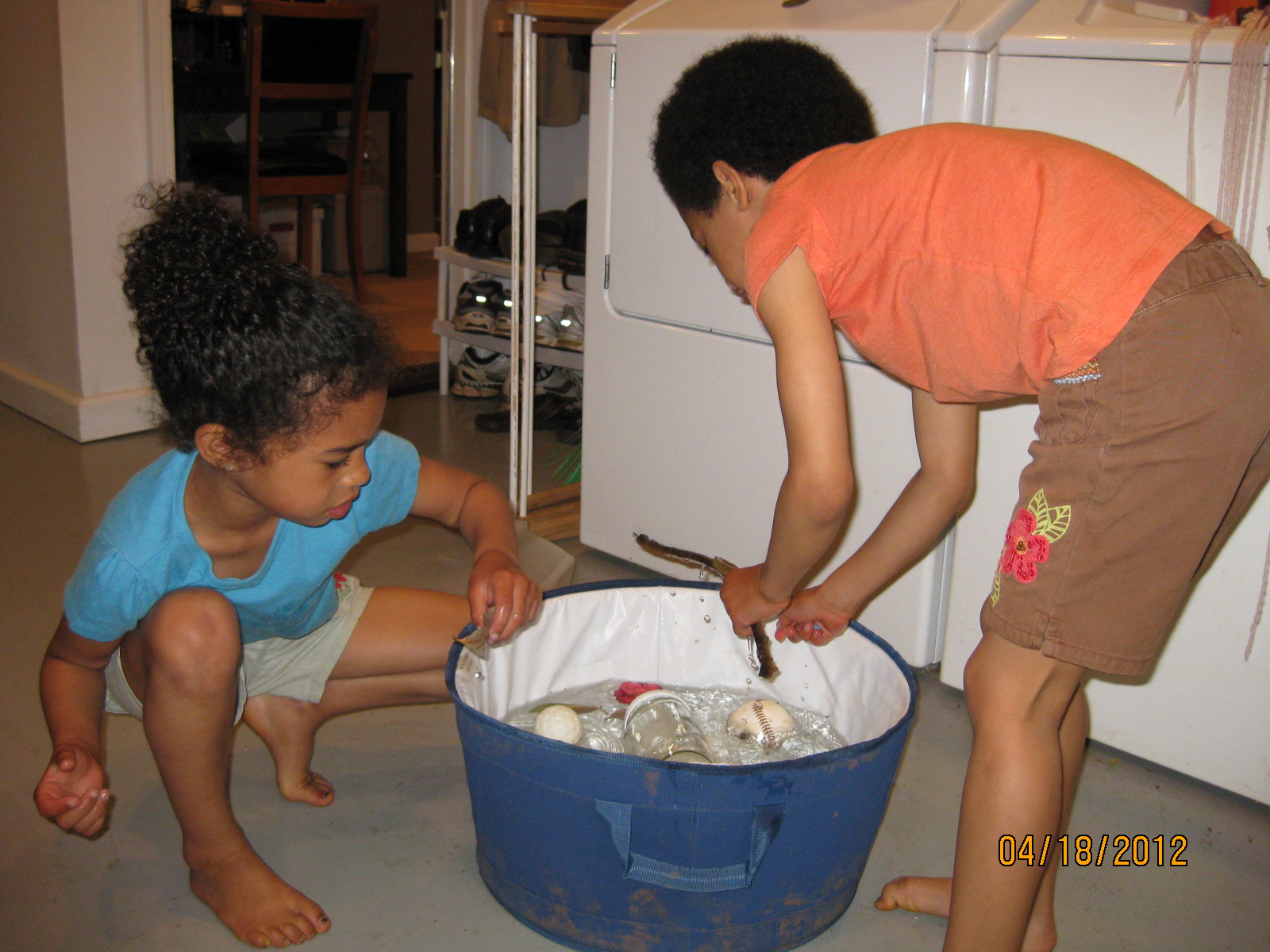
  • Studying Density and Buoyancy 
    • Kids love to learn. They especially love to learn when they are pursuing knowledge of topics in which they are sincerely interested, and in ways that feel comfortable to them. We hope our girls will always love learning, and that learning will be a central delight in their lives well beyond "the school years." To try to ensure that our own school is encouraging their innate love of learning, I hold a meeting with the girls before, after, and halfway through each school year. I ask them to share with me what they think worked well and what didn't work so well during the previous weeks and months. I ask for their suggestions on both the content of what we will study next and the activities we will engage in. I write down their responses on a white board or large flip chart so that they can see I am taking them seriously, and then I take these notes and use them in planning upcoming curricula. They get a kick out of knowing that they helped to formulate our lessons, and I get to relish how pleasurable it is to teach when students are excited about learning. 
  • A recognition that learning is an everywhere-, anytime-, lifelong task
  • Learning Math While
    Plotting Out the Garden
    • Both G-P and I have also tried to demonstrate to the girls that learning is not something that is done solely--or even primarily--in the context of schooling, but that it can happen wherever we are, at any time. That is why we named our school "Whole World Homeschool": we aim to see the whole world as our classroom, our resource center, and our subject of study. Starting up this farm together has given us a wonderful opportunity to demonstrate to the girls the importance of learning for adults as well as children. They have watched us repeatedly seek out new knowledge and acquire new skills, and then enjoy applying that learning to taking better care of our animals, our little piece of land, and ourselves. 
  • Active curiosity 
    • Kids love to learn because they are incredibly curious. If you've ever watched a little girl stand mesmerized over a pile of dirt, trying to work out the comings and goings of a colony of ants, or watched a little boy's eyes light up as he finally sees the difference in a dragonfly and a damselfly, then you know what I'm talking about. Too often today, education involves taming and inhibiting children's curiosity in favor of instituting order and guaranteeing test results. It is a tragedy, and probably one of the main motivators of many homeschooling parents. One of the ways I try to nurture active curiosity in my own girls is being curious right alongside them--rushing off to the meadow to try to identify the bone Simi found there, or stopping everything to look up the meaning of a word Segi came upon in the chapter book she's reading, and then the playing around with some of the many ways we can use it. I've found that getting to learn fascinating things alongside my kids is one of the most delightful perks of homeschooling. In fact, on most days I am not so much a "teacher" as a facilitator of our collective learning. 
  • A sense of wonder and awe
  • Celebrating the Wonders of
    Our Creek
    • We go on nature walks at least once a week, very often through the an ecological preserve on our way to visit the our local library. Despite my adultish tendency to prod the girls to keep moving (Why do we do that to our little ones so much?), we stop often to examine and exclaim over some of the many small wonders that populate our route--the particularly beautiful rock, the newly blooming flower, the bird's nest high in a tree. More often than not, we also spot signs of fairies, and sometimes even glimpses of unicorns, on these walks. More than any biology text, more than any religious scripture, it is my daughters who have taught me that the world is truly a wonder-ful, awe-some place. I hope their education will nourish and expand this perspective in them, not temper or civilize it.
  • An ability and willingness to listen well to others and to carefully observe the world around them
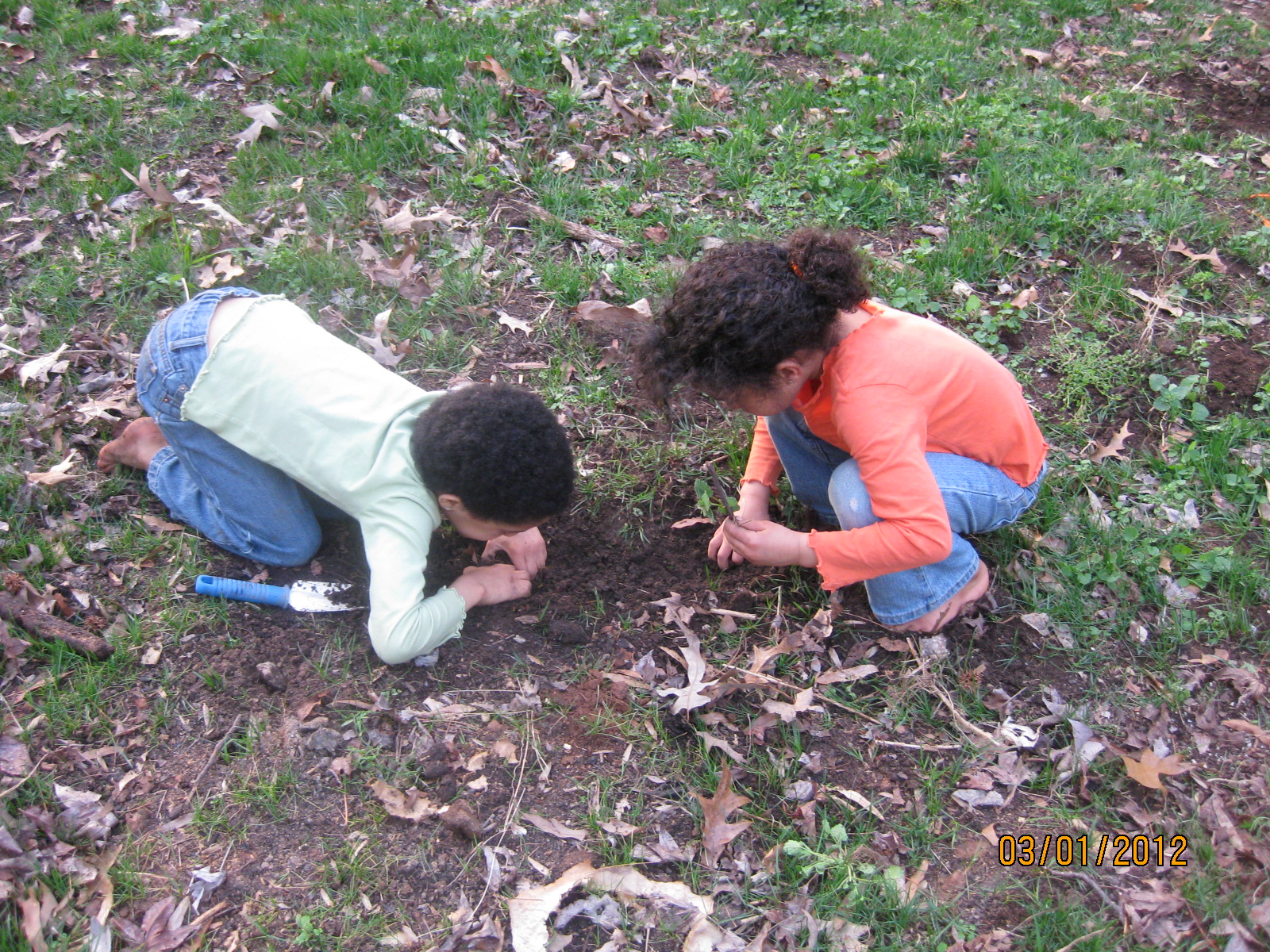
    • Investigating Soil
    • This is--perhaps as much as the love of learning--an indispensable key to becoming an effective learner. It involves being able to quieten one' mind, to see beyond one's assumptions, and to open oneself to new realities. One of the ways I've tried to teach this is by occasionally sending the girls out into our yard, or the woods that surround it, to sit for a certain period of time in location of their choosing. While there, they are to do nothing but sit and listen (or, on another day, to look or touch). After the time period is over, they come back and share what they noticed about this place that they have been to so many times before, and then we discuss the importance and rewards of attentiveness.
  • A global perspective (knowledge of and respect for other cultures, ethnicities, classes, religions, races, and lifestyles)
  • Making an Australian Fruit Salad
    • As an anthropology professor, I spent a great deal of time teaching global awareness to college students--a more formidable task than I had thought it would be. Many of them had graduated from high school (often with honors) with without learning much at all about the world beyond our nation's boundaries--or even beyond their own state, or subculture, race or class. We want our girls to grow up to be global citizens--to understand that there are many different ways to be human, and to know that they can learn a great deal from people who live very different lives than they do. To this end, during the past school year, we studied a different country each month. During that month, the girls read books about the country, watched educational videos about it, wrote mini-essays about it, learned about the everyday life of a child growing up there, prepared and ate typical dishes, made one or more traditional crafts, and listened to some of the country's music. 
  • An awareness of who they are, where they come from, and where they fit in the larger world
    • We have also studied Nigeria, Tennessee, and Appalachia--the "homelands" of our girls (that is, where their parents and most of their ancestors were raised). Later on, we will do more in-depth study of the state of North Carolina and the history, geography, and cultures of the United States. 
  • A commitment to being good citizens: of their community, their state, their country and their world
    • Collecting Trash Along Local
      Roadways on Earth Day
    • The girls and I have integrated into our studies a variety of service projects, including being farmer's helpers at an educational farm in Ohio, delivering meals for Meals on Wheels, participating in environmental clean-up projects, purchasing and packing up school supplies for kids in our town, and writing letters to government officials and CEOs. I hope we will be able to do more of this kind of work together as the girls grow older. (Few volunteer programs allow young children to participate, so that has been a real limiting factor for us so far.)
  • An appreciation for "worthwhile work well done," and a recognition that the work they do is important 
  • Cleaning Out a Barn Stall
    • After our girls wake up each morning, dress themselves and make up their beds, they go out to the barn to start their farm chores. Simi (the 6-year-old) is in charge of cleaning out the goat stall and Segi (the 7-year-old) is in charge of the chicken coop. I assist them as needed, and we work together to feed all the animals, evaluate their health, check their waterers, and haul the heavy buckets of muck we've collected into the woods to the compost pile. On a typical day, they will carry out a variety of other chores as well. G-P and I have tried to make it clear that the contributions they make to the workings of the farm--as well as to the workings of our household more generally--are critical, and that we value and appreciate what they do. To see them learn the satisfaction that comes from completing a tough physical task has been just as rewarding for us as watching them successfully complete writing and math assignments. In fact, as Laura Grace Weldon points out in this article, research has shown that children who regularly do chores are more likely to succeed both academically and in adulthood.
  • A love for the natural world and an understanding of the importance of caring for that world
    • A great deal of our science studies so far have involved investigating the plants, animals, water systems, and habitats right around us. We not only discover fascinating facts about these things, but we also learn how human behavior impacts them. We continually talk about what it means to share the world with other creatures and to care for the earth that supports us all. For the girls, as for most children, all this makes perfect sense. They have not--as we adults have--learned to see themselves as separate from and superior to non-human beings. We hope they will continue to consider themselves citizens of the natural world who are both beholden to and responsible for the well-being of the earth.
  • Empathy, kindness, respect, helpfulness, and politeness
  • Contemplative Practice
    • One of our favorite activities during the 2011-2012 school year was Angel Bear Yoga. It is a yoga program written especially for kids. The girls and I practiced it at least a couple of times a week, and sometimes more. Each of our yoga sessions would focus on fostering an important character trait such as thoughtfulness, truthfulness, or compassion. We discussed the traits together, sharing how we understood them and thinking about ways we could practice them in our everyday lives. Then we did yoga poses that resembled the forms of animals and plants whose characteristics reflect those traits. 
  • An understanding of the importance and power of cooperation
    • Pulling Together
    • Learning in our school is not a competitive task. The girls are encouraged to work together to learn, and they seem to enjoy doing so. In fact, they often cheer one another on during a particularly challenging task. Of course, I cannot prevent siblings from sometimes feeling competitive with one another, and it does happen. But it helps a great deal that I do not give grades or dole out rewards for individual work. I hope the girls will come to agree that gaining knowledge and improving one's skills (i.e., learning) are their own rewards. And much more satisfying in the long run than grades, stickers, or candy!  
  • An ability to communicate effectively and express themselves creatively
  • The Playwrights Acting
    • When the girls are practicing their writing skills, more often than not, they are writing about a topic, or writing with a purpose, that they themselves have chosen. The "assignment" may be a mini-essay about their favorite dessert animal, or a letter to a relative or a friend--whatever the case, they are genuinely trying to communicate something. This not only increases their motivation to do their work well (they certainly do better on such assignments than on filling in the blanks of worksheets); it also gives us a chance to discuss their interests and ideas.
    • I encourage the girls to express themselves and communicate their thoughts and feelings in many other ways as well: through painting, coloring, and drawing; through dancing, music-making, and drama; through crafting; through building (with clay, with stones, or with wood, hammers, and nails); through poetry composition; and so forth.
  • Patience and perseverance
  • Learning Patience (and Mechanics!)
     from a Neighbor
    • Since patience and perseverance are central both to effective learning and to contented living, teaching them to my girls are part of what I try to do every day. I thus encourage--and generally require--them to finish the tasks they start, even the most difficult and frustrating ones. Of course, like so many of the other traits listed here, these two are perhaps best taught by example. Unfortunately, as my girls know all too well, patience is not my greatest strength. (Actually, I never realized what an impatient person I was until having children!) Thus, central to my attempts to nurture patience in them is struggling to model patience myself. This has been one of my biggest challenges as a homeschooling parent.
  • Self-acceptance
    • Our girls look different than most of the kids around them. And they often act differently, too. We hope that the education they get at home will encourage them to love and accept themselves for who they are, no matter where they end up on the scale of normal to eccentric. We hope our studies of human diversity will help us here.
  • Courage
    • We also hope their education will foster in them the courage to follow their hearts, and to do what is right when they are faced with life's challenges and dilemmas, matter how difficult or unpopular their actions might be. To that end, we regularly read about the lives of courageous women and men: Amelia Earhart, Martin Luther King, Jr., Ang San Suu Kyi, Wilma Mankiller, Mahatma Gandhi, Wangari Maathai, and others. We have also read together many fictional books featuring courageous girls and boys: The Railway Children, Caddie Woodlawn, The Little Princess, The Conch Bearer, The Birchbark House series, and The White Giraffe series.

As you may have noticed, there is not anything in the above paragraphs about learning to recite the multiplication tables or memorizing the names of all the U.S. Presidents or state capitals. Yes, we will work on many specific skills and facts in the course of our studies together, but G-P and I believe that that sort of learning is not nearly as important as acquiring the characteristics I have listed above. As Einstein pointed out, and my Grandpa so loved to paraphrase, "An education is what you've got left after you forget everything you learned." We don't mind much if our girls can't recall at some point that 8 x 8 = 64, or that they can't remember the name of the twenty-first President. What is important, we believe, is to help them acquire the tools they'll need to live well and responsibly in our world, and to effectively pursue the dreams of their hearts. If we can do that for them, then their schooling will have been a success.

Now where are those lesson plans I'd started? . . .